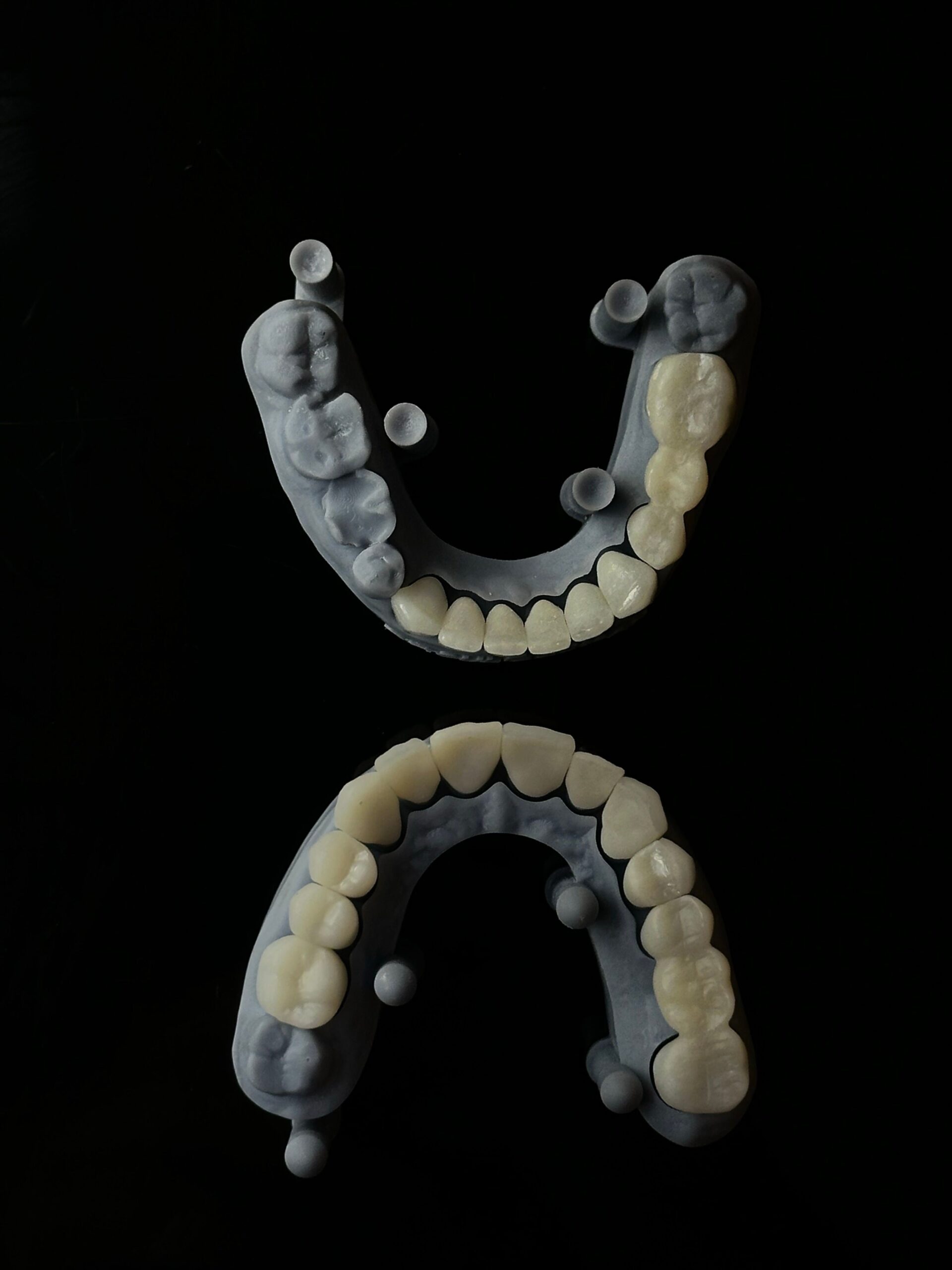
A missing tooth affects more than just your smile’s appearance, it can change how you chew, how your other teeth shift over time, and even how your face looks over the years. Dental bridges have long been a trusted, effective solution for closing that gap. At Olive Branch Dental in Indianapolis, we help patients understand exactly how bridges work and whether one is the right fit for restoring their bite and smile.
What Is a Dental Bridge?
A dental bridge is a fixed restoration that literally bridges the gap left by one or more missing teeth. It consists of a replacement tooth, called a pontic, held in place by crowns anchored to the natural teeth on either side of the gap, known as abutment teeth. Once cemented into place, a bridge functions as a single, non-removable unit, restoring both appearance and chewing function in the area of the missing tooth.
Types of Dental Bridges
Traditional bridges are the most common type, using crowns on both neighboring teeth to support the pontic in between. Cantilever bridges are used when there is only a natural tooth on one side of the gap, anchoring the pontic with a single supporting crown. Implant-supported bridges use one or more dental implants instead of natural teeth as anchors, which can be a good option when neighboring teeth are not strong enough to support a traditional bridge or when preserving those teeth from alteration is a priority.
Why Replacing a Missing Tooth Matters
It is tempting to ignore a gap, especially one that is not highly visible, but doing so can create a cascade of problems over time. Neighboring teeth often drift into the empty space, throwing off your bite alignment, while the opposing tooth can over-erupt without anything to bite against. An uneven bite can also lead to additional wear and, in some cases, jaw discomfort. Replacing a missing tooth promptly with a bridge helps prevent these downstream complications.
The Bridge Placement Process
Getting a bridge typically involves reshaping the two neighboring teeth to accommodate supporting crowns, followed by a digital scan or impression used to fabricate your custom bridge in a dental laboratory. A temporary bridge protects the prepared teeth while your permanent restoration is made, usually over one to two weeks. At your final visit, the permanent bridge is checked for fit and bite alignment before being cemented securely into place.
Caring for Your Bridge
A bridge requires some specific care beyond standard brushing and flossing, particularly cleaning underneath the pontic where food particles can accumulate. A floss threader or water flosser helps clean this area effectively, since regular floss cannot pass beneath a fixed bridge. Keeping the supporting teeth healthy through regular checkups is especially important, since the bridge’s stability depends on those teeth remaining strong and cavity-free.
How Long Do Bridges Last?
With proper care, a dental bridge commonly lasts 10 to 15 years, and some last even longer with diligent hygiene and regular dental visits. The most common reason bridges eventually need replacement is decay developing in one of the supporting teeth, which underscores the importance of thorough cleaning around the bridge and consistent professional checkups.
Bridges vs. Implants: A Brief Comparison
Bridges typically offer a faster treatment timeline and lower upfront cost compared to implants, making them appealing for patients who want a quicker solution. Implants, on the other hand, do not require altering neighboring teeth and help preserve jawbone density in a way bridges cannot. Your dentist can help you weigh these trade-offs based on your specific situation, budget, and timeline preferences.
Frequently Asked Questions
Does getting a bridge require removing healthy tooth structure?
Yes, the neighboring teeth need to be reshaped to accommodate supporting crowns, which involves removing some enamel even from healthy teeth.
Is getting a bridge a painful process?
The procedure is performed with local anesthesia, so patients typically feel pressure but not pain. Any post-procedure sensitivity is usually mild and short-lived.
Can a bridge be used to replace multiple missing teeth?
Yes, bridges can replace one or more consecutive missing teeth, depending on the strength and condition of the available supporting teeth.
Will my insurance cover a dental bridge?
Most dental insurance plans provide partial coverage for bridges, since they restore function rather than serving a purely cosmetic purpose. Our team can help verify your specific benefits.
What happens if a supporting tooth develops a problem later?
If a supporting tooth develops decay or other issues, the bridge may need to be removed and replaced or repaired, which is why protecting those teeth with good hygiene is so important.
Restore Your Bite and Smile Today
If you are living with a missing tooth, our Indianapolis team at Olive Branch Dental can help you explore whether a bridge is the right solution. Schedule your consultation today to get started.