Missing one or more teeth affects far more than your smile’s appearance, influencing everything from chewing efficiency to the long-term health of your jawbone. Two of the most common replacement options, dental bridges and dental implants, both restore function and appearance, but they work in very different ways. At Olive Branch Dental, we help Indianapolis patients weigh the differences so they can choose the option best suited to their needs.
How Dental Bridges Work
A traditional dental bridge fills the gap left by a missing tooth using a false tooth, called a pontic, anchored in place by crowns placed on the two neighboring teeth. Those neighboring teeth are reshaped to support the crowns, and once the custom bridge is fabricated and cemented into place, it functions as a fixed, non-removable restoration. Bridges have been used successfully in dentistry for decades and remain a reliable, well-understood solution.
How Dental Implants Work
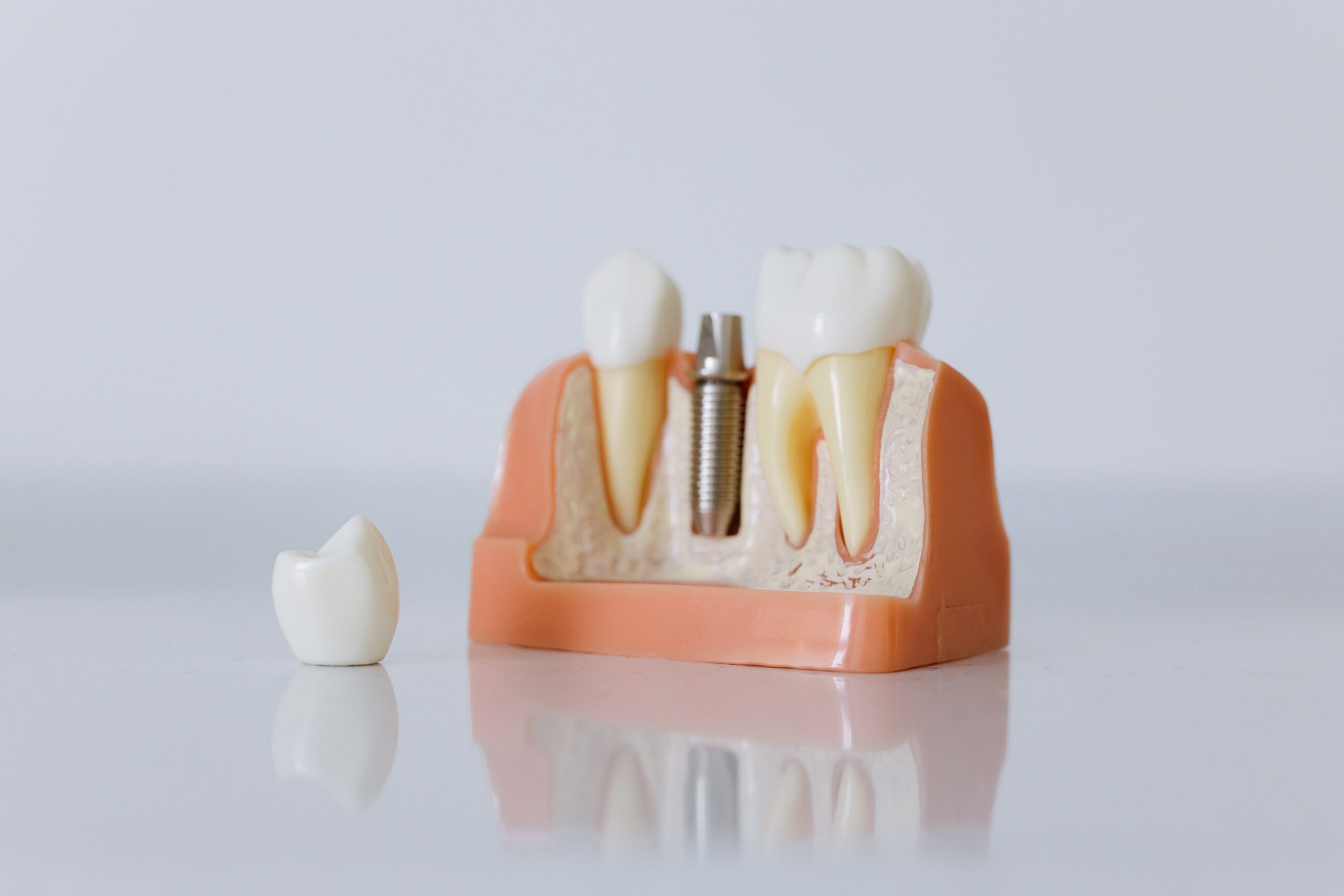
A dental implant replaces a missing tooth from the root up. A titanium or zirconia post is surgically placed into the jawbone, where it fuses with the bone over several months. Once healed, a custom crown is attached, creating a replacement tooth that functions independently, without relying on neighboring teeth for support. Implants can also be used to support a bridge across multiple missing teeth, offering a hybrid approach in certain situations.
Comparing Impact on Neighboring Teeth
One of the most significant differences between these options is how they affect your other teeth. A bridge requires reshaping the two neighboring teeth to accommodate supporting crowns, which means removing some healthy enamel even if those teeth were previously cavity-free. An implant, by contrast, stands entirely on its own and does not require any alteration to adjacent teeth, preserving more of your natural tooth structure overall.
Comparing Bone Health
This is where implants offer a distinct long-term advantage. Natural tooth roots stimulate the jawbone every time you chew, and that stimulation is what keeps bone density stable over time. A missing tooth root means that stimulation stops, gradually causing the jawbone to lose density and volume. Because an implant post replaces the root itself, it continues providing that stimulation, helping preserve your jawbone’s shape and strength. A bridge, which sits above the gumline without a root replacement, does not offer this same benefit.
Comparing Procedure and Timeline
A bridge can typically be completed in a couple of visits over a few weeks, since it does not require a healing period the way an implant does. An implant involves a longer overall timeline, often three to six months or more, to allow proper fusion with the jawbone before the final crown is placed. Patients who want a faster solution may lean toward a bridge, while those willing to invest more time for the longer-term benefits of an implant often find it worthwhile.
Comparing Longevity and Maintenance
With proper care, dental bridges commonly last 10 to 15 years before needing replacement, while implants often last decades, with many patients keeping their implant post for life, needing only occasional crown replacement over the years. Bridges require diligent cleaning underneath the pontic using a floss threader or water flosser to prevent decay on the supporting teeth, while implants are cared for much like natural teeth with standard brushing and flossing.
Cost Considerations
Bridges typically have a lower upfront cost than implants, though implants can offer better long-term value given their durability and the fact that they do not risk damage to healthy neighboring teeth. Insurance coverage varies for both options, and our team can walk you through a detailed cost comparison and financing options during your consultation.
Frequently Asked Questions
Which option is better for my specific situation?
This depends on factors like the health of your neighboring teeth, your jawbone density, budget, and how quickly you need a solution. A consultation helps determine the best fit for you.
Can I get an implant if I already have a bridge?
In some cases, yes, particularly if the bridge is failing or the supporting teeth develop new issues. Your dentist can evaluate your specific situation.
Do bridges or implants look more natural?
Both options can look very natural when properly fitted, since both use custom-shaded, tooth-colored materials designed to blend with your smile.
Is the implant surgery painful?
The procedure is performed under local anesthesia, with sedation options available, so most patients report it is far more comfortable than they expected, with manageable soreness afterward.
Which option is covered better by insurance?
Coverage varies significantly by plan for both options. Our team is happy to help verify your specific benefits before you decide.
Find Your Best Tooth Replacement Option
Whether a bridge or an implant makes more sense for you, our Indianapolis team at Olive Branch Dental is here to help you weigh the options clearly. Schedule a consultation today to discuss the right path for restoring your smile.