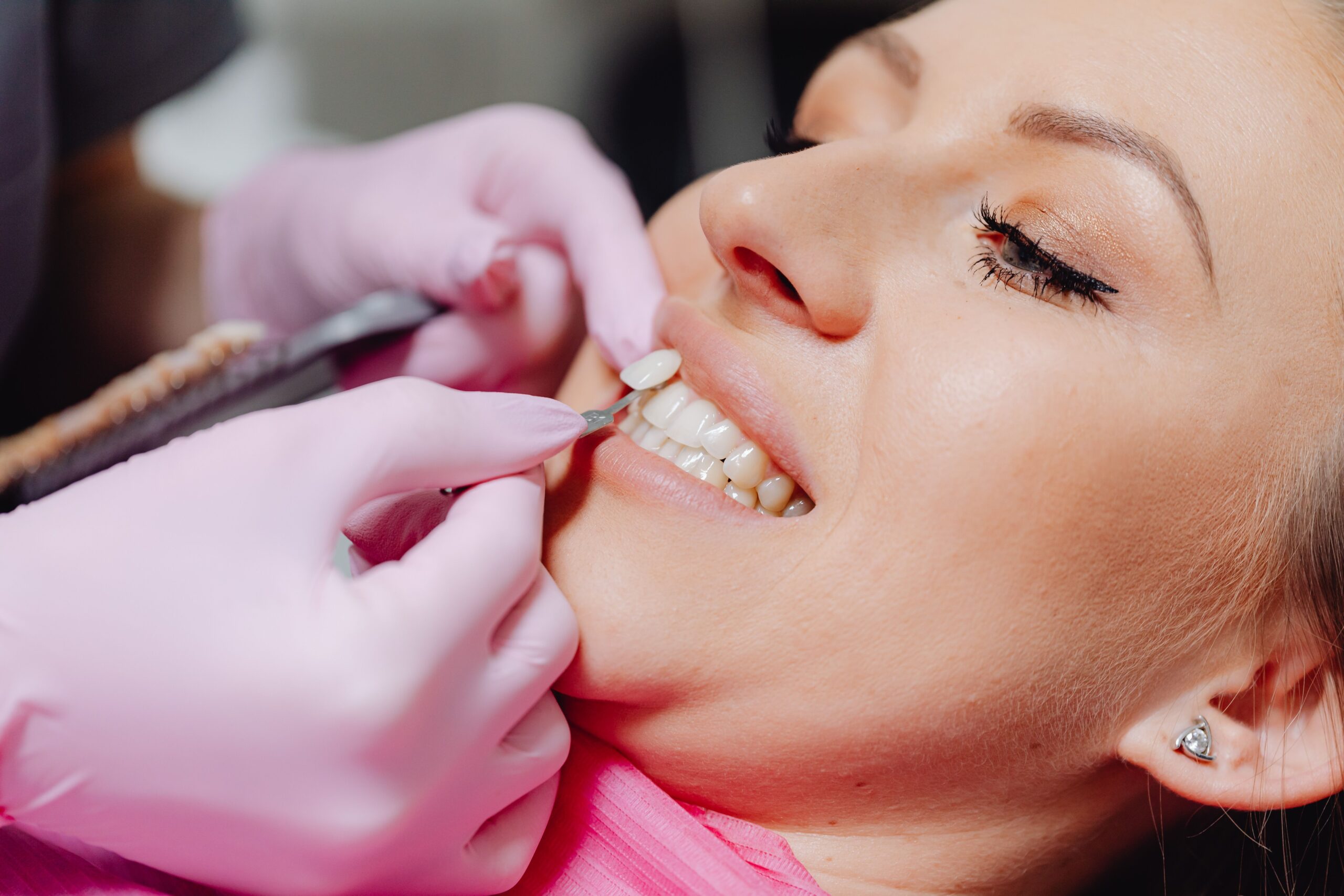
Porcelain veneers are one of the most requested cosmetic treatments at Olive Branch Dental, and for good reason. Few procedures offer the ability to transform color, shape, size, and alignment all in one treatment. But veneers are also a significant investment, so it is worth understanding exactly what they involve before deciding if they are right for your smile goals.
What Are Porcelain Veneers?
Veneers are thin, custom-crafted shells, typically made of porcelain, that are bonded to the front surface of your teeth. Unlike crowns, which cover an entire tooth, veneers cover only the visible front portion, making them a more conservative option for improving appearance while preserving more of your natural tooth structure. Porcelain is prized for veneers because it closely mimics the light-reflecting properties of natural enamel, giving results that look remarkably lifelike rather than artificial or overly uniform.
What Veneers Can Correct
Veneers are highly versatile and commonly used to address stubborn discoloration that does not respond to whitening, chips or minor fractures, gaps between teeth, teeth that are slightly misshapen or uneven in size, and mild crowding or misalignment that does not require full orthodontic treatment. Because each veneer is custom-designed, your dentist can address several of these concerns simultaneously for a fully coordinated result.
The Veneer Process, Step by Step
Your veneer journey begins with a consultation where we discuss your goals and evaluate whether veneers are the right fit, sometimes using a digital preview to show you a projected result. A small amount of enamel, often less than half a millimeter, is typically removed from the front of each tooth receiving a veneer to make room for the porcelain shell. Impressions or digital scans are then taken to guide the fabrication of your custom veneers, which are crafted in a dental laboratory over one to two weeks. Temporary veneers protect your teeth during this waiting period, and once your permanent veneers are ready, they are carefully bonded into place and adjusted for a precise, comfortable fit.
Traditional vs. Minimal-Prep Veneers
Traditional veneers require slight enamel removal to accommodate the porcelain shell, ensuring a natural thickness and fit. Minimal-prep or no-prep veneer options are available for certain cases and involve little to no enamel removal, though they are best suited to specific situations, such as patients wanting to add subtle volume or coverage without significant reshaping. Your dentist can determine which approach is best based on your natural tooth structure and desired outcome.
How Long Do Veneers Last?
With proper care, porcelain veneers commonly last 10 to 15 years, and many patients enjoy them for even longer before a replacement is needed. Longevity depends significantly on habits like avoiding using teeth to open packages, wearing a nightguard if you grind your teeth, and keeping up with regular dental checkups so any wear or damage can be caught early.
Caring for Your Veneers
Veneers are cared for much like natural teeth, with twice-daily brushing and daily flossing. Porcelain is highly stain-resistant, though the cement used to bond veneers in place can be more susceptible to staining over time, so limiting dark beverages and avoiding tobacco helps maintain a bright, even appearance. Routine six-month cleanings also allow your dentist to check the edges of your veneers for any signs of wear or lifting.
Are Veneers Right for You?
Veneers work best for patients with generally healthy teeth and gums who want a significant, long-lasting cosmetic improvement. Patients with active gum disease, significant decay, or a habit of severe teeth grinding may need to address those issues first, or consider a nightguard alongside veneers, to protect their investment long-term. A consultation is the best way to determine if veneers, or another cosmetic option, will best achieve your goals.
Frequently Asked Questions
Are veneers permanent?
Because a small amount of enamel is typically removed to place traditional veneers, the process is considered irreversible, though veneers themselves can be replaced when they eventually wear out.
Do veneers look natural?
Yes, porcelain is specifically chosen for its ability to mimic natural enamel, and veneers are custom-shaded and shaped to blend seamlessly with your smile.
Is getting veneers painful?
The process is performed with local anesthesia when enamel removal is needed, so patients typically feel pressure but not pain. Any post-procedure sensitivity is usually mild and short-lived.
How many veneers do most patients get?
This varies widely. Some patients choose just one or two veneers to correct a specific tooth, while others opt for six to eight veneers across their smile for a fully uniform look.
Does insurance cover veneers?
Veneers are generally considered a cosmetic procedure and are not typically covered by dental insurance, though financing options are often available to help manage the cost.
Explore Veneers at Olive Branch Dental
If you are considering veneers to address discoloration, chips, gaps, or shape concerns, our Indianapolis team is here to help you explore whether they are the right fit. Schedule your cosmetic consultation today to get started.